How to Turn a Podcast Guest Spot Into Followers and Email Subscribers

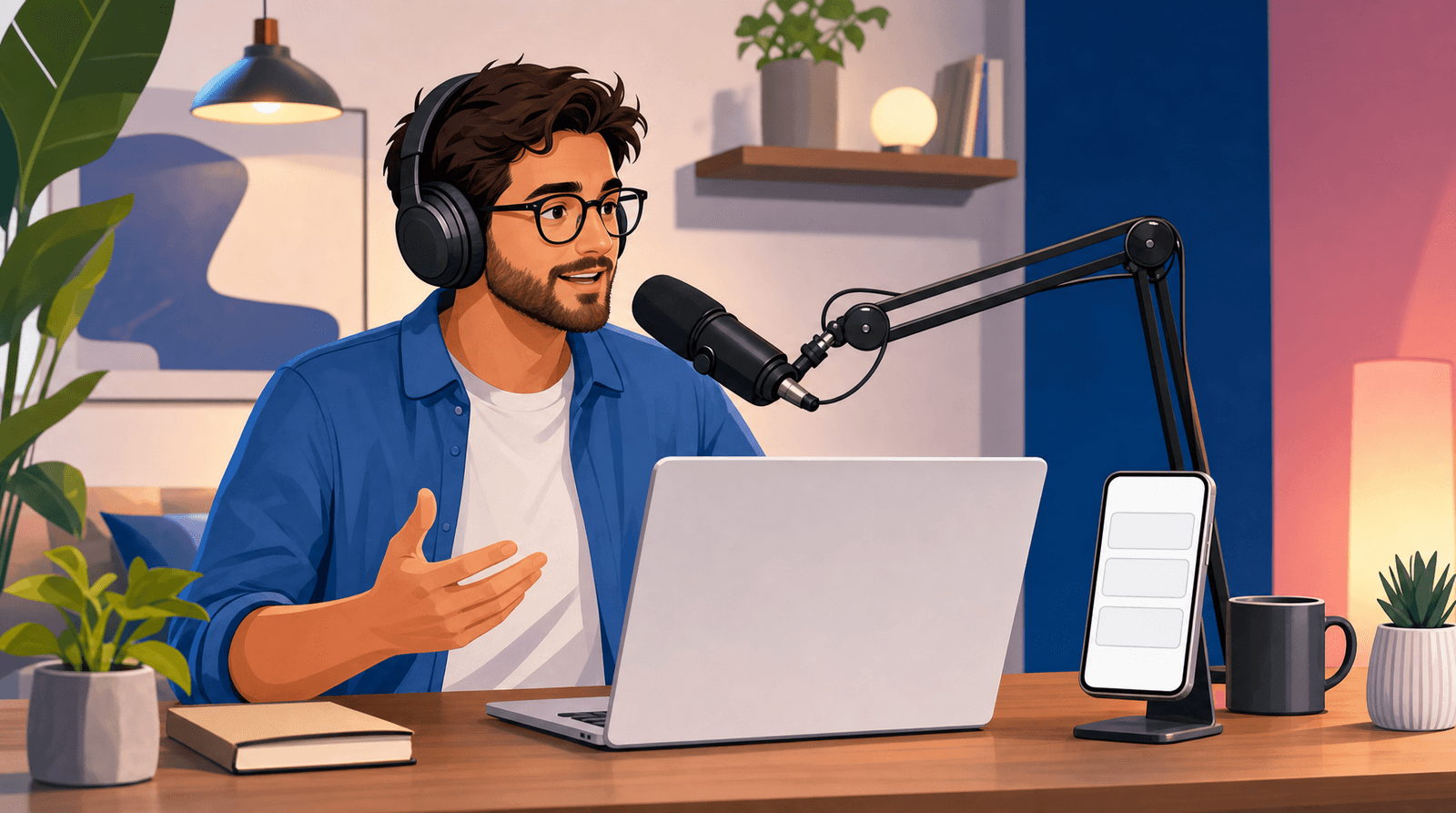
You get the email. A podcast in your niche wants you on as a guest. You prep, you show up, you say three or four things you are genuinely proud of, and the host tells you it was one of their best episodes of the year.
Then it airs. You refresh your follower count. Four new people. One of them is your mum.
Here is the thing: the interview almost certainly wasn't the problem. Podcast audiences are some of the warmest attention you will ever get, because they chose you for forty minutes with nothing else on the screen. The problem is what happens in the ninety seconds after someone decides they like you. On Instagram, that decision ends in a tap. On a podcast, it ends with someone driving a car, holding a dog lead, or halfway through the washing up, trying to remember a URL they heard once.
Guest spots don't fail at the content stage. They fail at the handoff. This guide is about fixing the handoff.
Why Podcast Traffic Behaves Nothing Like Social Traffic
Before the tactics, it helps to understand what you are actually working with, because podcast listeners break most of the assumptions your link-in-bio page was built on.
It is ears-only. There is no clickable link in the audio. Whatever you say has to survive a trip through someone's memory and into a phone keyboard later. Every extra character, hyphen, or clever spelling is a place where that trip fails.
It is delayed. Someone hears you on Tuesday and looks you up on Saturday. The moment of intent and the moment of action are days apart, which means your page has to still make sense to a person who has forgotten the specifics of what you said and only remembers "she was the one who explained pricing really well."
It is low volume and high intent. A show with 3,000 downloads will never look impressive next to a Reel with 200,000 views. But a listener who sat through your whole segment is worth a genuinely absurd multiple of a scroller who watched two seconds. Podcast traffic converts. There is just less of it, which is exactly why you cannot afford to leak it.
It compounds. Episodes don't disappear from a feed after 24 hours. People find them through search, through back catalogues, through recommendations. A guest spot from 2024 can still send you a client in 2027, but only if the URL you said out loud still goes somewhere useful.
Put those four together and you get a clear brief: one short, sayable destination that stays valid forever and makes the next step obvious to a stranger with partial memory.
Step 1: Pick a URL Someone Can Hear and Remember
This is the step nearly everyone gets wrong, and it happens before you ever record.
Say your link out loud right now. If you had to explain the spelling, or if there is a hyphen, an underscore, a number, or a word people commonly misspell, it will not survive an audio handoff. "It's my name, then a dash, then the word studio, but studio with a Y" is not a call to action. It is a spelling test.
What works:
- Use your name if it's simple.
liinks.co/yournameis close to unbeatable because listeners already heard your name in the intro. It is the only string they are guaranteed to have. - Use one common word if your name is hard. If your name gets misspelled constantly, pick something concrete and phonetic instead. One word, no punctuation, no ambiguity.
- Say the platform, not the protocol. "Liinks dot co slash charlie" beats "h-t-t-p-s colon slash slash." Nobody types the protocol. Saying it just burns three seconds of goodwill.
- Consider a custom domain if you have one. On the Pro plan, Liinks lets you point your own domain at your page, so you can say
yourname.comand have it land exactly where aliinks.coURL would. For anyone doing regular media, that is the single cleanest thing you can say into a microphone.
One rule above all: pick one and never change it. The whole value of podcast traffic is that it compounds over years, and it only compounds if old episodes still point somewhere live. If you are worried about being locked in, that is a page-content problem, not a URL problem. You can rebuild everything behind the link as often as you like.
Step 2: Build the Page a Listener Actually Lands On
A podcast listener arrives with a completely different mental state than someone coming off a Reel. They already like you. They have heard your voice for half an hour. What they do not have is context: they may not know what you sell, what you are called on Instagram, or whether you have anything for them at all.
So the page has to answer three questions in about five seconds.
Who are you, in one line? Not your job title. What you do for the person reading. A bio like "I help freelance designers price their work" does more in seven words than a paragraph of credentials.
What is the one thing they should do next? Podcast listeners are the most willing audience you will ever have, and most creators waste that willingness on a wall of eleven equal-weight buttons. Put a single primary action at the top: the free resource you mentioned, the newsletter, the booking link. Everything else goes below.
Where does the rest of your world live? Socials, work, shop. Group them so the page stays scannable. Liinks sections and folders exist for exactly this, and they keep a long page from reading like a list of tabs you forgot to close.
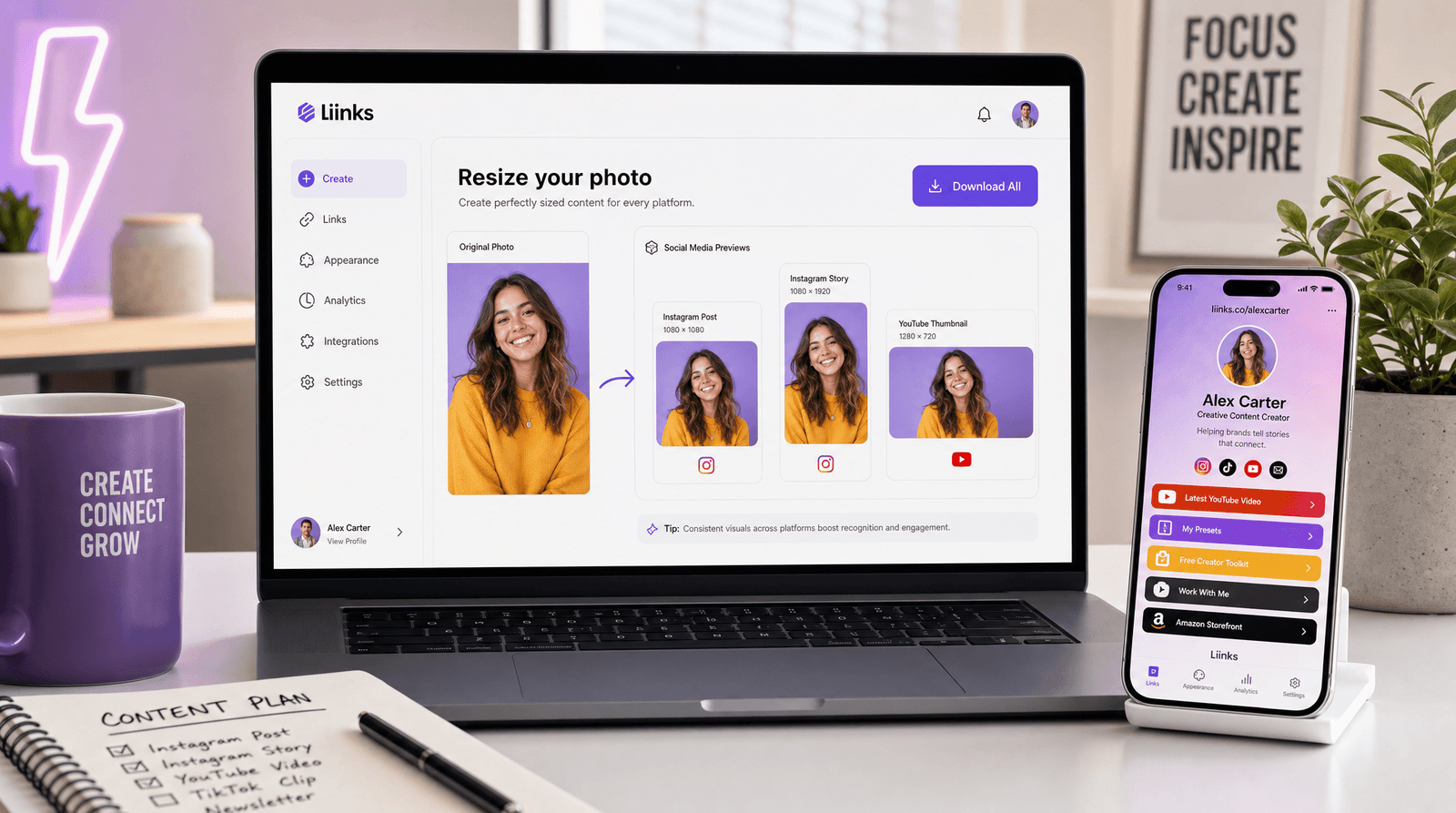
Here is a real example of the shape working well:
Notice the order. A one-line bio that says what she does for you, then socials, then a featured piece of content sitting above everything else. A listener who just heard her talk gets an immediate way to sample more of her work rather than a decision between eleven buttons. That is the whole job.
One more thing worth doing before your episode airs: swap the top block for something that matches the show. If you spent the interview talking about pricing, make the top button the pricing template. It takes thirty seconds in the editor and it is the difference between "she mentioned something useful" and "here it is." Our guide on why every new follower visits your profile once goes deeper on designing for that single visit, and it applies double to podcast traffic, where the visit may not happen for a week.
Step 3: Say It Properly, and Say It Twice
There is an art to giving out a URL on someone else's show without sounding like an ad read. Three rules cover most of it.
Attach it to value, not to yourself. "You can find me at liinks dot co slash charlie" is forgettable. "I put the actual pricing template we just talked about at liinks dot co slash charlie, it's free" gives the listener a reason to remember. The URL should always be the delivery mechanism for something specific.
Say it twice, in different places. Once naturally, in the middle, right after you reference something people will want. Once at the end, when the host asks where people can find you. The mid-roll mention catches people while they are interested. The outro mention catches people who have already decided.
Slow down and spell the tricky part. Say it at about half the speed of your normal talking pace. If any part of it is ambiguous, spell that part once. Do not spell the whole thing, which sounds robotic, but "that's l-i-i-n-k-s with two i's" takes two seconds and saves a percentage of your listeners from landing on a 404.
Also: ask the host, before recording, whether they add links to their show notes. Almost all of them do. Have your one URL and one sentence ready to paste into the follow-up email so that the person editing the episode has zero work to do. The easiest link to get is the one you hand someone pre-written.
Step 4: Work the Long Tail, Because the Episode Doesn't Expire
Most guests treat the release day as the finish line. It is closer to the starting gun.
- Post the clip yourself. Ask for a 60 to 90 second cut of your best answer, or pull one yourself. Post it to your own channels with the same URL in the caption. Your existing audience seeing you on someone else's show is social proof, and it costs nothing.
- Add the episode to your own page. Create a "listen to me elsewhere" section and drop the appearances in. It builds credibility for every future visitor and gives podcast hosts a reason to book you, since they can see you have done this before.
- Pitch the next one while this one is fresh. A live episode is the best possible pitch asset. Two or three shows in the same niche will happily book someone who has just proved they can hold a conversation.
- Refresh the destination when the season changes. The URL never changes, but what sits behind it should. Six months later, an old episode is still sending you people. Make sure the top of the page is still something you want them to find.
If you host a show as well as guest on them, the same logic runs in reverse, and our step-by-step guide to building a link-in-bio hub for your podcast covers that side of it.
Step 5: Capture the Email, Because They Only Come Once
This is the step that separates guest spots that build a business from guest spots that build a nice feeling.
A podcast listener who visits your page is, statistically, not coming back. They heard you once, they were curious once, and unless something happens during that visit, that is the entire relationship. A follow is barely better: it puts you into a feed that may never show you to them again.
An email address is the only outcome from that visit that you actually own.
So put a signup block near the top of the page, and make the reason to join specific. "Subscribe to my newsletter" converts poorly because it describes a format, not a benefit. "Get the pricing template we talked about on the show" converts well because it closes a loop the listener already has open in their head.
Two details that matter more than they sound:
- Reference the episode in the signup copy. A listener who reads "the template from the podcast" knows instantly that they are in the right place. That recognition is worth more than any amount of clever copywriting.
- Deliver immediately. Whatever you promised should arrive in the first email, not the fourth. You are converting borrowed attention into an owned list, and the fastest way to lose it is to make people wait.
If you want the full mechanics of this, we wrote a whole guide on turning social traffic into email subscribers that applies directly here.
Step 6: Actually Measure It
Podcast attribution has a reputation for being impossible. It is not impossible, it is just indirect, and a small amount of effort gets you most of the way.
Watch your Liinks analytics for the week the episode drops. Direct traffic and referrals from podcast apps will show up as a bump against your normal baseline, and the shape of that bump tells you something useful. A sharp spike on release day with nothing after means people are hearing you but not remembering the URL. A smaller, longer tail means the handoff is working and the back catalogue is doing its job.
For anything you can put in show notes, use a tracked link so you can tell shows apart. The free Liinks UTM builder will generate one in a few seconds, and it turns "podcasts seem to work" into "that show sent 180 people and 22 of them joined the list, let's do more shows like that."
Then use what you learn. If listeners are landing but not converting, your top block is wrong. If nobody lands at all, your URL is too hard to say. Those are two completely different problems with two completely different fixes, and analytics is the only thing that will tell you which one you have. If you want a deeper walkthrough of reading these numbers, our post on using analytics to drive your link-in-bio success breaks it down.
TL;DR
- Guest spots fail at the handoff, not the interview. Podcast audiences hear your link instead of seeing it, and most link setups are built for eyes.
- Pick a URL you can say out loud. Short, phonetic, no hyphens or numbers, and never change it. Old episodes keep sending traffic for years.
- Design the landing page for partial memory. One line on who you are, one clear primary action, everything else grouped underneath.
- Say the URL twice, once attached to something specific in the middle of the episode and once at the end, and slow down when you say it.
- Swap the top of your page to match the episode before it airs, so listeners land on the exact thing you mentioned.
- Work the long tail. Post the clip, add the episode to your page, pitch the next show while this one is fresh.
- Capture emails, not just follows. A listener visits once. An email address is the only part of that visit you own.
- Measure the bump. Tracked links and page analytics tell you whether the problem is your URL or your page.
Give Your Next Interview Somewhere to Land
The hardest part of a guest spot is getting booked, and you already did that. Losing the audience afterwards to a URL nobody could remember or a page that didn't say what you do is a genuinely painful way to waste a good hour of work.
Liinks gives you one short, sayable link that stays the same forever while everything behind it changes: a clean page you can reshape for each episode, sections that keep it scannable, email capture built in, and analytics that show you which shows are actually sending people.
Build your Liinks page before your next recording, and give the people who liked you somewhere worth going.